Downtown Memphis, TN Neighborhood Guide
Downtown Memphis is the city's oldest neighborhood and its most varied housing market. On a single trolley ride you can pass 1880s mansions, converted cotton warehouses, glass condo towers, and a planned riverfront village. This guide covers what we tell our own buyers when they ask whether Downtown is right for them.
Where Is Downtown Memphis, TN?
Downtown Memphis sits on the fourth Chickasaw Bluff, high above the Mississippi River in the southwestern corner of Tennessee. It is the city's central business district and historic core, covering roughly five square miles.
The Mississippi River and Mud Island form the western edge. Interstate 40 runs along the north near the Pinch District, and Danny Thomas Boulevard and Manassas Street mark the eastern transition into Midtown. Crump Boulevard and I-55 close off the south below the South Main Arts District. Most of Downtown, including Harbor Town on Mud Island, falls within ZIP code 38103.
A Brief History of Downtown Memphis
Memphis was founded in 1819 by John Overton, James Winchester, and Andrew Jackson. They chose the bluffs because the high ground sat above the river's floodwaters, and the original street grid still forms the backbone of Downtown.
By the 1840s and 1850s, steamboats, rail yards, and cotton exchanges had made the riverfront one of the largest inland cotton markets in the world. In the early 1900s, Beale Street became the center of Black music, business, and culture in the South. W.C. Handy's "Memphis Blues" came out of that scene and helped lay the groundwork for rock, soul, and R&B.
In 1968, Downtown was the setting of the sanitation workers' strike. On April 4 of that year, Dr. Martin Luther King Jr. was assassinated at the Lorraine Motel on South Main Street. Decades of suburban flight followed, and then a long revitalization. The Lorraine became the National Civil Rights Museum, the Main Street Trolley returned, warehouses became lofts, and FedExForum brought NBA basketball a block off Beale.
This history affects real estate today. Much of Downtown's most sought-after housing exists because older commercial buildings were preserved and converted rather than demolished.
Downtown Memphis Districts
Downtown is a collection of small districts, and each one suits a different kind of buyer. Choosing the right district matters more than choosing Downtown in general.
The Core is the business center, with office towers, government buildings, The Peabody, and most of the residential high-rises. It suits buyers who want city energy and a short walk to work.
South Main Arts District is the most walkable and characterful part of Downtown. It has warehouse lofts, galleries, boutiques, and restaurants, and the National Civil Rights Museum anchors its southern end.
Beale Street Entertainment District is primarily for nightlife and live music rather than residential living, though some condos sit within a few blocks of it.
Harbor Town and Mud Island form a riverfront community built on New Urbanist principles. Expect front porches, alley-loaded garages, walking trails, and a quiet, village-like feel just minutes from the Core. It is also where Downtown's highest single-family prices tend to be.
The Pinch District is Memphis's oldest neighborhood. It sits near the Bass Pro Shops Pyramid on the northern edge and is in an active redevelopment phase, which appeals to buyers who are looking ahead.
Uptown lies just north of the Core. It mixes newer single-family homes with restored early-1900s cottages and has some of Downtown's more affordable detached housing.
Victorian Village, along Adams Avenue on the eastern edge, preserves grand 19th-century mansions.
The Edge District connects Downtown to the Medical District. It is known for converted auto-row buildings, Sun Studio, and easy access to the UT Health Science Center and Regional One.
Types of Homes in Downtown Memphis
Downtown's housing follows its history, so the type of home you want largely determines where you will look.
Home Type | Where You'll Find It | What Sets It Apart |
|---|
Industrial loft conversions | South Main, the Core, Edge District | Exposed brick, timber beams, concrete floors, tall ceilings, factory windows |
High-rise and mid-rise condos | The Core, riverfront bluff | Floor-to-ceiling glass, balconies, concierge services, river views |
New Urbanist homes and townhomes | Harbor Town, Mud Island | Porches, rear-alley garages, walkable streets, neo-traditional design |
Victorian mansions | Victorian Village | Greek Revival, Italianate, and Second Empire architecture |
Bungalows and cottages | Uptown, Pinch outskirts | 1920s-era wood or brick homes with covered front porches |
One practical point for loft buyers is to look closely at HOA reserves, parking arrangements, and how the conversion was done. Two lofts in the same block can differ a great deal in quality.
Downtown Memphis Real Estate Market Overview
Downtown is one of the stronger-priced markets in Memphis. River views, historic architecture, and walkability support values above the citywide median.
Metric | Approximate Range |
|---|
Median listing price | $335,000–$340,000 |
Price per square foot | $180–$215 |
Average rent (1–2 bedrooms) | $1,200–$2,250/month |
Renters vs. owners | About 65% renters / 35% owners |
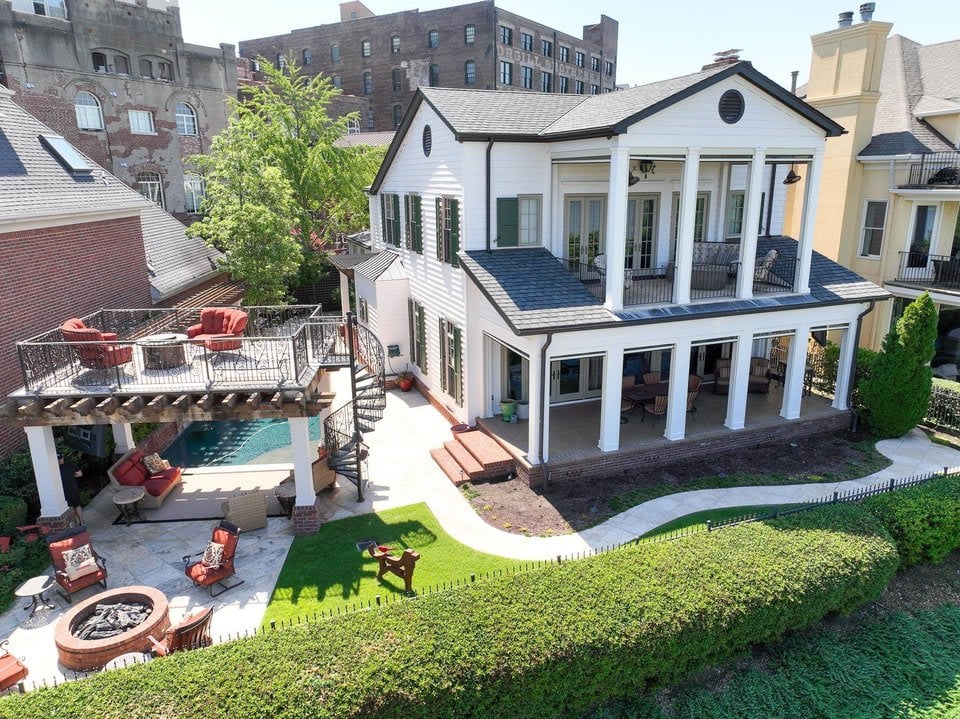
Studio and one-bedroom condos in older Core buildings generally start between $150,000 and $220,000, which makes Downtown one of the more accessible ways to own in a walkable urban setting. South Main lofts and Harbor Town single-family homes usually run from $350,000 to over $600,000. Riverfront penthouses and top Harbor Town properties can exceed $1 million. Our team closed 467 Monteigne Blvd in Harbor Town at $1,975,000.
The high share of renters is worth noting for investors. Demand from young professionals, medical residents, and downsizers keeps the rental pool steady. Market figures change, so ask us for current numbers before making an offer.
What It's Like to Live in Downtown Memphis
Daily life Downtown is compact. Most residents walk to dinner, ride the trolley to work, and spend weekends along the river, which is a real contrast to the car-dependent suburbs of Shelby County.
The feel of the neighborhood varies by district. Harbor Town feels like a self-contained village with its own grocery in Cordelia's Market, preschools, and green space. South Main has a creative, artsy atmosphere. The Core is busy on weekdays and quieter at night.
Downtown works especially well for people employed in government, law, logistics headquarters, or the nearby UT Health Science Center and Regional One Medical District. Residents also get easy access to the city's biggest events, including the Memphis in May International Festival, the Beale Street Music Festival, and the World Championship Barbecue Cooking Contest, which are held at the redesigned Tom Lee Park.
Getting Around Downtown Memphis
Downtown is one of the few places in Memphis where living without a car, or with only one, is realistic.
The MATA Main Street Trolley runs north to south through Downtown, connecting the Pinch, the Renasant Convention Center, the Core, and South Main. Explore Bike Share stations are spread throughout the area, and the riverfront path system links Tom Lee Park to Big River Crossing for walking and biking.
For drivers, I-40 and I-55 wrap around Downtown, so suburban Shelby County is easy to reach. Memphis International Airport is about 15 minutes away. Parking is usually handled through building garages, gated lots, or monthly permits in public garages run by the Downtown Memphis Commission.
Schools Serving Downtown Memphis
Downtown is served by Memphis-Shelby County Schools.
Downtown Elementary School (10 N. 4th St.) serves Pre-K through 5th grade in the Core. Memphis Grizzlies Preparatory, a tuition-free public charter school for boys, is located on Jefferson Avenue. Booker T. Washington High School, one of the city's most historically significant high schools, is nearby. Maria Montessori School in Harbor Town offers a private Montessori option.
Many Downtown families also look at Midtown private schools 5 to 10 minutes away, such as Grace-St. Luke's Episcopal School and Christian Brothers High School. School zoning can change, so families should verify assignments for a specific address before buying.
Parks and the Mississippi Riverfront
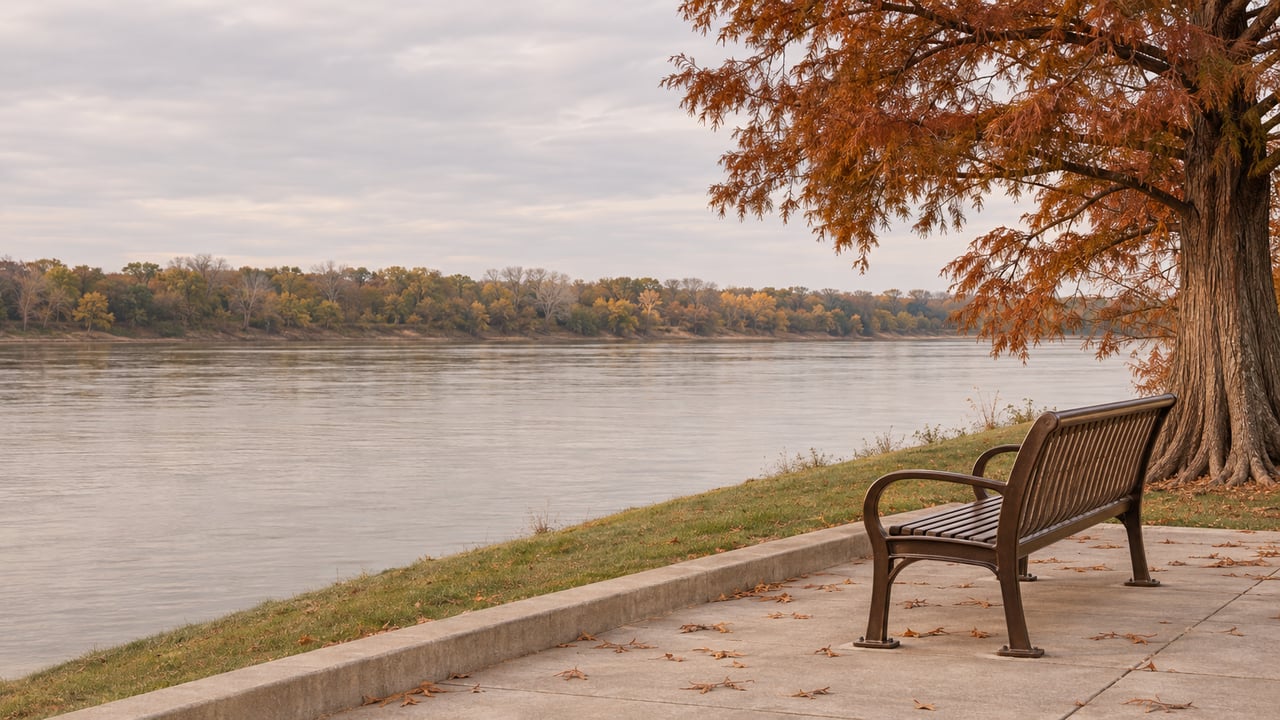
The river is Downtown's biggest amenity. Very few American downtowns offer this much public waterfront.
Tom Lee Park is the centerpiece. It covers about 30 acres and reopened after a roughly $60 million redesign by Studio Gang and SCAPE. It now includes covered sport courts, a large nature-themed playground, native plantings, thousands of new trees, and A Monument to Listening by artist Theaster Gates, which honors river hero Tom Lee.
Fourth Bluff Park, formerly Memphis Park, overlooks the river from the Core and hosts markets, music, and lawn games. Mud Island offers walking paths and riverfront green space close to Harbor Town homes. Big River Crossing runs nearly a mile along the historic Harahan Bridge, so you can walk or bike from Downtown Memphis into Arkansas.
Beale Street and Downtown Memphis Nightlife
Beale Street is a National Historic Landmark. For three blocks, live blues, rock, and soul play nearly every night.
The anchors are B.B. King's Blues Club at 2nd and Beale, Blues City Cafe for ribs and late-night R&B, Rum Boogie Cafe with its walls of signed guitars, and Itta Bena, a speakeasy-style lounge above B.B. King's. Handy Park, an open-air venue in the middle of the street, hosts free concerts and street performers.
Residents who want a quieter evening tend to go elsewhere. South Main has relaxed cocktail and wine bars, and the Edge District has taprooms and neighborhood pubs. Buyers who are sensitive to noise should keep in mind that Beale's energy carries a couple of blocks in every direction.
Downtown Memphis Dining and Local Food Scene
Downtown is where you will find some of the dishes Memphis is best known for.
For barbecue and soul food, Charlie Vergos' Rendezvous has served charcoal-grilled, dry-rub ribs from a downtown alley since 1948. Central BBQ sits steps from the National Civil Rights Museum. The Four Way, just south of Downtown, has been serving soul food since 1946 and fed leaders of the Civil Rights Movement.
For a night out, Flight Restaurant & Wine Bar on Main Street serves dishes and wines in tasting flights. Catherine & Mary's in the historic Chisca Hotel pairs Italian cooking with Southern ingredients. The Majestic Grille occupies a restored 1910 silent movie theater.
For everyday spots, the Arcade Restaurant, the city's oldest diner (founded in 1919), anchors South Main. Sunrise Memphis is a local favorite for biscuit breakfasts, and Hustle & Dough inside the Arrive Hotel covers coffee and pastries.
Arts, Culture, and Museums
Downtown has some of the country's most significant cultural institutions within walking distance of one another.
The National Civil Rights Museum at the Lorraine Motel is a nationally important destination. The Memphis Rock 'n' Soul Museum, developed with the Smithsonian, traces the music born along the Mississippi. The Blues Hall of Fame on South Main, the Cotton Museum on the historic Cotton Exchange trading floor, and the Belz Museum of Asian & Judaic Art round out the museums.
For performing arts, the restored 1928 Orpheum Theatre hosts touring Broadway shows and concerts, and the adjacent Halloran Centre offers smaller productions. On the last Friday of every month, South Main Trolley Nights brings open galleries, street music, and late shopping to the arts district.
Sports and Entertainment Venues
Downtown is the Mid-South's main sports and events district.
FedExForum, just off Beale Street, is home to the NBA's Memphis Grizzlies and University of Memphis Tigers basketball, and it hosts major concert tours. AutoZone Park, home of the Triple-A Memphis Redbirds, is often ranked among the best minor league ballparks in the country thanks to its skyline views and lawn seating. The renovated Renasant Convention Center overlooks the river and brings in conventions, expos, and theater. Tom Lee Park hosts the festivals, races, and outdoor events that fill the city's calendar.
Living near these venues is a perk on game nights but also means traffic and crowds. That trade-off is worth considering when choosing a building.
Frequently Asked Questions About Living in Downtown Memphis
Is Downtown Memphis safe to live in? As in any urban core, safety varies by block and district. The Downtown Memphis Commission's Blue Suede Brigade ambassadors patrol key areas, and Harbor Town, South Main, and the Core are popular with residents. Ordinary city habits apply, like locking your car and staying aware late at night. We recommend touring a building at different times of day before committing.
Where do Downtown residents buy groceries? Cordelia's Market serves Harbor Town, and smaller markets cover quick trips. Full-size supermarkets, including Kroger and Cash Saver, are 5 to 10 minutes away near the Midtown border.
How does parking work? Most condo and apartment buildings include garage or gated parking. If yours does not, the Downtown Memphis Commission's public garages offer monthly residential permits.
How noisy is Downtown? It depends on where you live. Within a block or two of Beale Street or FedExForum, expect noise on nights and weekends. South Main and the Core have steady daytime traffic and trolley bells. Harbor Town, Uptown, and the residential parts of the bluff are noticeably quiet.
Is Downtown dog-friendly? Yes. The riverfront path network, Tom Lee Park, Mud Island's green space, and neighborhood dog parks in Harbor Town and South Main give pet owners plenty of room to walk.
Buying Downtown is less about finding the right house than about finding the right block, building, and district for how you want to live. Myers Cobb Realtors knows these distinctions firsthand, from the details of South Main loft conversions to high-end sales in Harbor Town. Led by President Brittany Myers Cobb and Principal Broker + Partner Marq Cobb, our team handles residential, land, recreational, and commercial real estate across Memphis, Germantown, Collierville, and Lakeland. If you are thinking about buying or selling in Downtown Memphis, call us at (901) 552-4036 or email [email protected].
Downtown Memphis FAQs
What types of homes are available in Downtown Memphis?
Downtown offers historic lofts in converted warehouses, high-rise condominiums, townhomes, and single-family homes, including the planned riverfront neighborhood of Harbor Town on Mud Island.
What ZIP code is Downtown Memphis?
Most of Downtown, including Harbor Town on Mud Island, falls within ZIP code 38103.
Is Harbor Town considered part of Downtown Memphis?
Harbor Town is on Mud Island, across the Wolf River Harbor from the central business district. It is commonly grouped with Downtown and is minutes away via the A.W. Willis Avenue Bridge.
What should I know about buying a Downtown condo?
Review the HOA budget, reserves, rules, insurance, and any special assessments before you commit. Parking and storage arrangements vary by building. Our team helps you request and review association documents.
What can you walk to in Downtown Memphis?
Depending on the district, you can walk to the riverfront parks, Beale Street, FedExForum, the National Civil Rights Museum, the South Main Arts District, and the Main Street Trolley.
Why work with Myers Cobb Realtors Downtown?
Each Downtown building and district has its own rules and market. Marq Cobb and Brittany Myers Cobb help you compare options, and our concierge team keeps every step on track. We handle it.