By Myers Cobb Realtors®
If your garage has become the place where everything goes to be forgotten, you are not alone. For most homeowners, the garage starts as a functional space and gradually becomes a holding area for seasonal gear, duplicate tools, outgrown sports equipment, and boxes that were never fully unpacked after the last move. The good news is that a truly organized garage is more achievable than it looks, and the payoff goes beyond just finding things faster.
An organized garage adds real value to your home. Buyers in the Greater Memphis Area consistently notice how a garage looks and functions during a showing, and a clean, well-organized space signals that the entire property has been well cared for. Whether you are getting ready to list, settling into a new home, or simply reclaiming space you have been ignoring, a garage overhaul is one of the highest-return projects you can take on.
This guide walks you through a practical approach to getting your garage organized once and for all, using storage strategies that actually hold up over time.
Key Takeaways
- Starting with a full clear-out is the most important first step before any storage system is installed.
- Grouping items by category and frequency of use makes long-term organization far easier to maintain.
- Vertical wall space is one of the most underutilized assets in the average garage.
- Overhead storage is ideal for seasonal or infrequently used items that take up floor space.
- A well-organized garage can meaningfully improve your home's appeal when it comes time to sell.
Start With a Complete Clear-Out
Before you buy a single shelf or storage bin, everything needs to come out of the garage. This step feels dramatic, but it is the only way to get an accurate sense of what you are working with. When items are pushed into corners or stacked in front of each other, it is easy to forget what you own, leading to duplicates, expired products, and a general sense of clutter that no organizational system can fix from the outside.
Pull everything out onto the driveway and sort it into four categories: keep, donate, sell, and discard. Be ruthless here. If you have not touched something in two or more years, there is a good chance you do not need it. Broken tools, half-empty paint cans past their useful life, and equipment for hobbies you no longer pursue should all be on the table for removal.
Once the keep pile is established, wipe down shelves, sweep the floor, and take stock of your garage's actual dimensions and layout. Note where the electrical outlets are, where the natural light hits, and how traffic flows in and out. This information will guide every storage decision you make from here.
Pull everything out onto the driveway and sort it into four categories: keep, donate, sell, and discard. Be ruthless here. If you have not touched something in two or more years, there is a good chance you do not need it. Broken tools, half-empty paint cans past their useful life, and equipment for hobbies you no longer pursue should all be on the table for removal.
Once the keep pile is established, wipe down shelves, sweep the floor, and take stock of your garage's actual dimensions and layout. Note where the electrical outlets are, where the natural light hits, and how traffic flows in and out. This information will guide every storage decision you make from here.
What To Sort During a Garage Clear-Out
- Gardening tools, hoses, and soil amendments should be grouped together and evaluated for condition.
- Power tools and hand tools need an honest assessment; duplicates and broken items should go.
- Holiday decorations and seasonal gear take up significant space and benefit most from overhead or high-shelf storage.
- Sporting equipment, including bikes, kayaks, and camping gear, often requires specialized wall or ceiling mounts.
- Household overflow items, such as extra paper goods or cleaning supplies, should be inventoried so that you know exactly what you have before restocking.
Build a Zone-Based System
Once the clear-out is complete, the most effective long-term approach is to divide your garage into designated zones. A zone-based system means that every category of item has a permanent home, and when something needs to go back, it is obvious where it belongs. This is what separates a garage that stays organized from one that slides back into chaos within a few months.
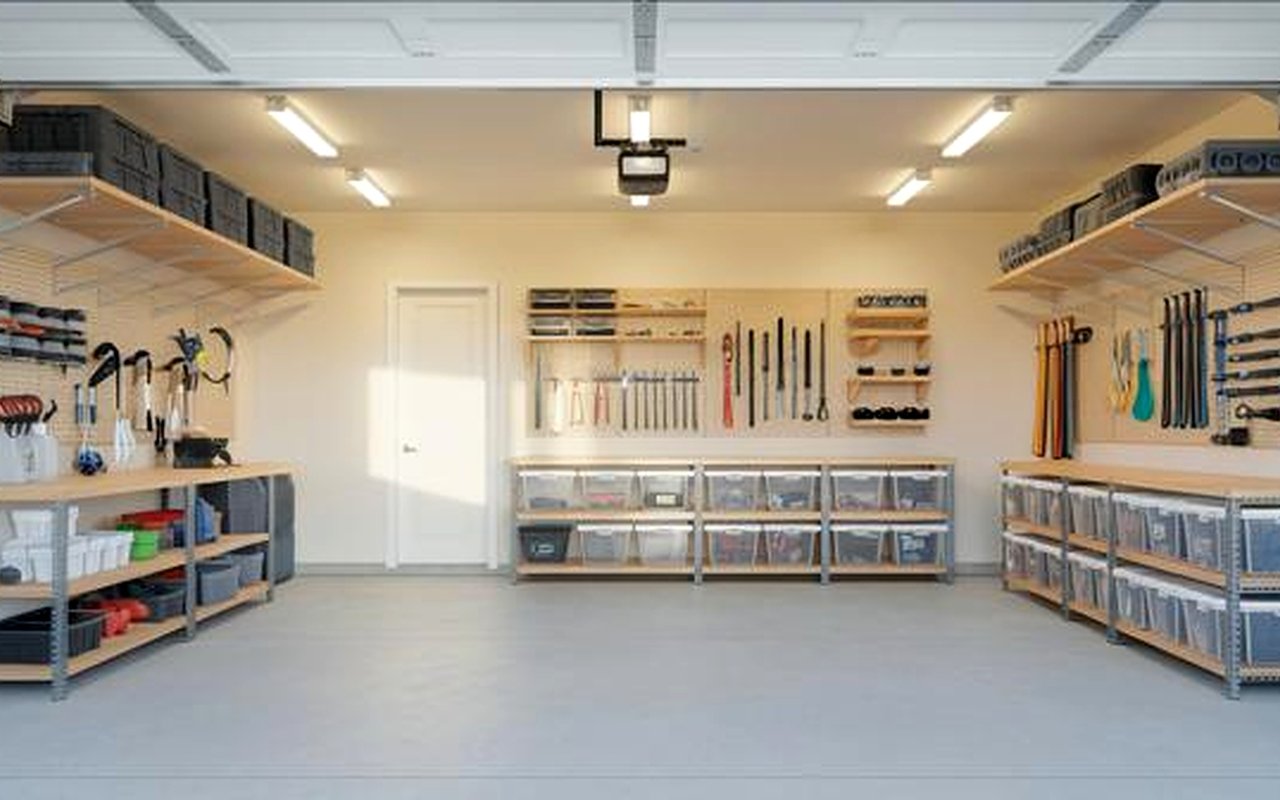
Common zones include a workshop area near the workbench, a gardening station near the door to the yard, a sports and recreation zone with wall-mounted hooks for bikes and gear, and a household storage zone for overflow pantry items or cleaning supplies. If you have vehicles that need to park there, plan the zones around the footprint of the cars first, then work outward toward the walls. Clear bins with printed labels, color-coded tape on shelves, and signage for each zone all make it easier for every member of the household to maintain the system without relying solely on memory.
Common zones include a workshop area near the workbench, a gardening station near the door to the yard, a sports and recreation zone with wall-mounted hooks for bikes and gear, and a household storage zone for overflow pantry items or cleaning supplies. If you have vehicles that need to park there, plan the zones around the footprint of the cars first, then work outward toward the walls. Clear bins with printed labels, color-coded tape on shelves, and signage for each zone all make it easier for every member of the household to maintain the system without relying solely on memory.
How To Define Your Garage Zones
- The vehicle zone should be mapped first; use painter's tape on the floor to mark where cars will park and ensure clearance on all sides.
- The workshop zone works best near a power source and under good overhead lighting.
- The gardening zone benefits from proximity to a side door or exterior access point.
- A sports and recreation zone near the main garage door makes gear easier to grab before outdoor activities.
- Designate a staging area near the entrance to the house for items that rotate in and out frequently, such as reusable grocery bags or athletic shoes.
Maximize Vertical and Overhead Space
Floor space in a garage is precious, especially if the goal is to actually park in there. The solution is to think vertically. Most garages have eight to ten feet of wall height that is completely unused from about four feet up. That wall space is some of the most valuable storage real estate in your home.
Wall-mounted systems offer the most flexibility. Slatwall panels, pegboards, and heavy-duty rail systems all allow you to configure hooks, baskets, shelves, and tool holders in whatever combination your inventory requires. Unlike built-in cabinetry, modular wall systems can be rearranged as your storage needs change. Bikes, rakes, shovels, ladders, and brooms all hang cleanly off the wall without consuming any floor space.
Overhead ceiling storage is ideal for seasonal items, luggage, and holiday decorations that you only need a few times per year. Ceiling-mounted platforms and overhead storage lifts can hold hundreds of pounds of gear while keeping everything off the floor and out of the way. If you are installing overhead storage, make sure it clears the tops of your vehicle doors when open, and avoid placing heavy items above where you regularly stand or walk.
Wall-mounted systems offer the most flexibility. Slatwall panels, pegboards, and heavy-duty rail systems all allow you to configure hooks, baskets, shelves, and tool holders in whatever combination your inventory requires. Unlike built-in cabinetry, modular wall systems can be rearranged as your storage needs change. Bikes, rakes, shovels, ladders, and brooms all hang cleanly off the wall without consuming any floor space.
Overhead ceiling storage is ideal for seasonal items, luggage, and holiday decorations that you only need a few times per year. Ceiling-mounted platforms and overhead storage lifts can hold hundreds of pounds of gear while keeping everything off the floor and out of the way. If you are installing overhead storage, make sure it clears the tops of your vehicle doors when open, and avoid placing heavy items above where you regularly stand or walk.
Vertical Storage Solutions Worth Considering
- Slatwall panels offer maximum flexibility and can hold everything from garden tools to sports equipment without drilling dozens of individual holes.
- Pegboard is an affordable option for tool organization near a workbench, keeping hand tools visible and accessible.
- Overhead ceiling platforms are best for large bins, luggage, and seasonal items that only come down a few times each year.
- Freestanding shelving units work well against walls where you cannot drill or where you need to store heavy items, such as bags of soil or boxes of tile.
- Bike wall hooks and ceiling pulleys free up a significant amount of floor space for households with multiple bikes.
Choose the Right Bins and Containers
Not all storage bins are created equal, and the wrong containers can actually make an organized garage harder to maintain over time. Opaque bins without labels become mystery boxes within weeks. Bins that are too large become too heavy to move once full. Containers that are not weather-resistant can warp, crack, or harbor moisture in a garage environment.
For the Greater Memphis Area climate, where summer heat and humidity are real factors, weather-resistant plastic bins with locking lids are the most practical choice for long-term storage. Clear bins work well when you want to see contents at a glance; labeled opaque bins work better when you want a cleaner visual look. Either approach is fine as long as labeling is consistent.
Stackable bins maximize vertical space on shelves; bins with built-in handles are easier to retrieve from overhead storage. Match your bin size to what goes inside: smaller bins for fasteners, batteries, and small tools, and larger bins for holiday decorations, sporting accessories, and seasonal textiles.
For the Greater Memphis Area climate, where summer heat and humidity are real factors, weather-resistant plastic bins with locking lids are the most practical choice for long-term storage. Clear bins work well when you want to see contents at a glance; labeled opaque bins work better when you want a cleaner visual look. Either approach is fine as long as labeling is consistent.
Stackable bins maximize vertical space on shelves; bins with built-in handles are easier to retrieve from overhead storage. Match your bin size to what goes inside: smaller bins for fasteners, batteries, and small tools, and larger bins for holiday decorations, sporting accessories, and seasonal textiles.
Bin and Container Selection Tips
- Choose bins that are the same brand or system so that they stack cleanly and store efficiently on shelves.
- For heavy items like tools or hardware, opt for lower-profile bins that sit closer to the floor or on lower shelves.
- Clear bins are ideal for frequently accessed items; labeled opaque bins work well for long-term storage where aesthetics matter.
- Invest in bin lids that actually seal; open bins in a garage environment collect dust and are more likely to become drop zones for random items.
- Measure your shelves before purchasing bins to ensure that the dimensions align and no space is wasted.
FAQs
How Long Does It Take To Organize a Garage?
For a typical two-car garage, a full clear-out and reorganization usually takes a full weekend. The first day is best spent on the clear-out and sorting process, and the second on installing storage solutions and putting everything back in its designated zone. If you are adding wall systems, overhead storage, or new shelving, factor in additional time for installation or for a handyman to assist.
What Are the Most Common Garage Organization Mistakes?
The most common mistake is buying storage systems before clearing out and sorting. Another frequent misstep is underestimating how much floor space vehicles actually need, which leads to storage solutions that get in the way rather than helping. Skipping the labeling step is also a common shortcut that causes systems to break down within a few months.
Does an Organized Garage Add Value to a Home?
Yes, a clean and well-organized garage makes a strong impression during showings in the Greater Memphis Area real estate market. Buyers often open the garage door and take a close look, and a tidy, functional space with clear storage signals that the home has been well-maintained overall. It is one of the lower-cost improvements that can meaningfully affect buyer perception.
How Do I Keep the Garage Organized After the Initial Overhaul?
The key is making it easier to put items away correctly than to drop them wherever. Clear zones, consistent labeling, and a regular seasonal review go a long way toward keeping the system intact. Involve everyone in the household in the zone system so that the rules are shared.
A Garage That Works as Hard as You Do
An organized garage is one of those improvements that pays off in ways you feel every single day: less frustration, more time, and a home that simply functions better.
If you are thinking about what improvements to prioritize before listing your Memphis-area home, or if you just moved into a new space and want to set it up right from the start, small projects like this one can add up to real results.
When you are ready to take the next step, our team at Myers Cobb Realtors® is here to guide you. Reach out to us to talk through what improvements make the most sense for your goals and your market.
If you are thinking about what improvements to prioritize before listing your Memphis-area home, or if you just moved into a new space and want to set it up right from the start, small projects like this one can add up to real results.
When you are ready to take the next step, our team at Myers Cobb Realtors® is here to guide you. Reach out to us to talk through what improvements make the most sense for your goals and your market.